


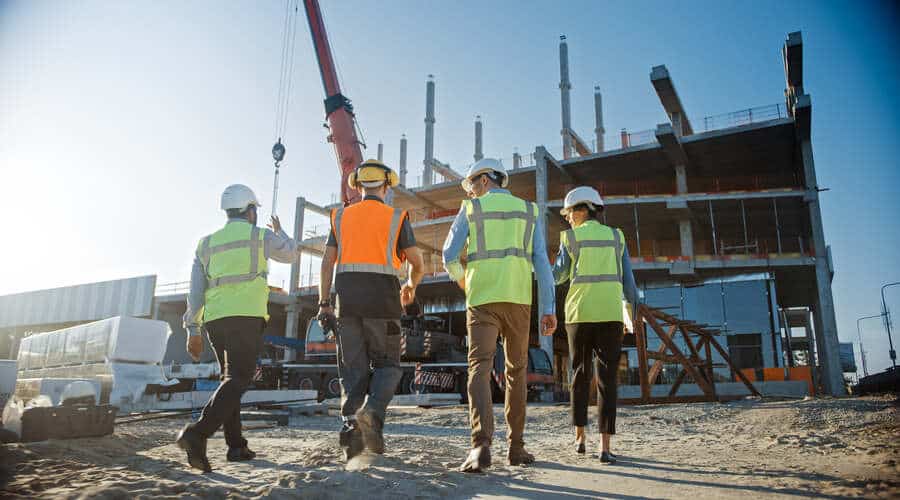
Whilst a toolbox talk may not be the highlight of your business week, it is a legal requirement. More importantly, it's an investment in the health and safety of your team.
In a Toolbox Talk, management consults with the team, and discusses situations that affect their health and safety.
A Toolbox Talk is not a one-direction presentation and the team is invited to share their views. Team members are routinely encouraged to report health and safety concerns.
A template can guide you through the process. This includes workers sharing insights on:
- Hazards and risks they have noted on site,
- How the team could make better decisions on hazard controls,
- The need for workplace facility upgrades,
- Suggestions for health and safety (of workers) improvements,
- Joint decisions on consulting procedures, risk resolutions, health and safety monitoring, and access to information or training.

Frequent, agile planning can keep the meetings to a ten-minute window.
How to get better results from Toolbox Talks
The more infrequent the talks are, the longer and more cumbersome they become. Frequent, agile planning can keep the meetings to a ten-minute window.
Topics usually vary depending on the project stage. They might be focused on a job or task-specific safety if incident reports have grown in that area. The last year has seen many PPE usage instruction talks. As well as the effect of the pandemic on job procedures. Keep the information clear, concise and structured.
Here are some tips to improve the talks:
- Don’t do ad hoc meetings; plan them in advance
- Give advance notice, so there's no scrambling or absenteeism
- If necessary, prepare supporting sources for the talks to help get the message across
- When you give advance notice, state that attendance is compulsory
- Use templates to keep records of topics and signed attendance
- Don’t make it a droning monologue. Instead, actively engage with the team and push them for ideas and feedback
Topics that could be covered range from protecting eyes, ears and respiratory systems, to safety at heights. They need to be is specific to a site’s current situation. Generic talks are a waste of time and disengage your team long-term.
Does your team need silica and silicosis education? Add it to your topics list. With the trend in facial hair, does a large percentage of your team grow a beard? Show them what a good facial fit of protective equipment looks like. As well as the need for a good seal.
Your team will be a good source of topics, so dip into that rich resource.
Toolbox Talk Templates
Use templates to keep your team safe and your projects in good order! We offer the Toolbox Talk:

Not sure what documents and procedures you might need in your trade? No worries! Simply visit Tradespeople Documentation. Here find access to Builder Assist’s instant download of documents and procedures specific to your trade.
ITP - Inspection Test Plans (ITP's)
These Construction Inspection Test Plans (ITPs) are specifically prepared for each building trade to provide support with quality assurance in the workplace.
A construction ITP assists to create a product that meets customer needs, expectations and requirements. And that's why you need one.
An ITP, or Inspection Test Plan, is a vital planning tool that delivers an effective solution to the when what and how of inspections for a project. It provides structure and procedural alignment. In addition, an ITP sets up the important preplanning to ensure your outcomes meet the necessary industry or regulatory standards. Here's a great resource for builders - the ITP Construction template pack.
Safety Management Plans (WHS)
Specifically designed for each trade starting up a business, these Work Health Safety Management Plans or WHS Management Plans, provide support with the management of Work Health & Safety in the workplace.Also referred to as Occupational Health & Safety (OH&S) the material provided in this section will assist with WHS/OHS management and training requirements for the workplace.